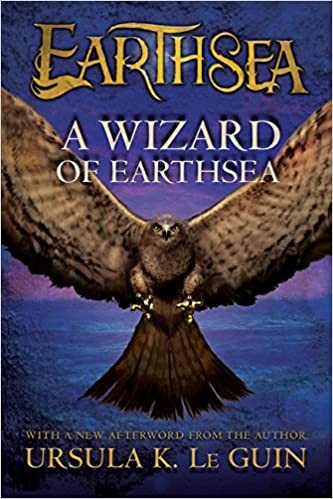
I actually read this once already, in my twenties, and came away thinking it was fine, a Foundational Text you’re supposed to respect rather than enjoy, nothing that stuck. Coming back to it now for a proper, slower second pass, I half expected to confirm that verdict, and honestly the first fifty pages did nothing to argue me out of it. Ged is a prickly, arrogant kid, the prose is deliberately old, told-like-a-legend rather than close third person, and Le Guin isn’t in a hurry. Then somewhere around the shadow escaping the binding spell it clicked, and I read the second half in one sitting.
Here’s the detail that took me by surprise and doesn’t get top billing in the reviews I skimmed afterward: the whole magic system runs on true names, knowing a thing’s real name gives you power over it, which means the entire plot is basically a linguistics problem with dragons attached. I kept thinking about it in terms of naming conventions in code, which is a strange comparison to make about a 1968 fantasy novel but there it is, that’s where my brain went. The climactic confrontation, when it finally arrives, is short, maybe two pages, almost anticlimactic on purpose, Ged doesn’t slay the shadow so much as name it and absorb it, which a few readers found deflating and I actually think is the whole point of the book landing.
The one thing that’s aged in a way worth naming honestly: the wizard school on Roke is men only, women in this world get hedge-witchery and herb-magic, nothing with real institutional power, and Le Guin has said in interviews she’d handle that differently if she wrote it today. It’s there. It’s a product of when it was written, same as the Tolkien-adjacent names some readers find a little stiff. Doesn’t erase how good the ending is, but it’s worth going in eyes open rather than treating this as some perfect, timeless artifact.
Four stars, not five, mostly because the pacing sags in the swamp-and-raft stretch before the ending pulls it back together. But the idea that a kid’s magic school with a dragon and a rival and a dark thing chasing him existed decades before certain other, much more famous versions is not nothing, and Le Guin does it in under two hundred pages without breaking a sweat.