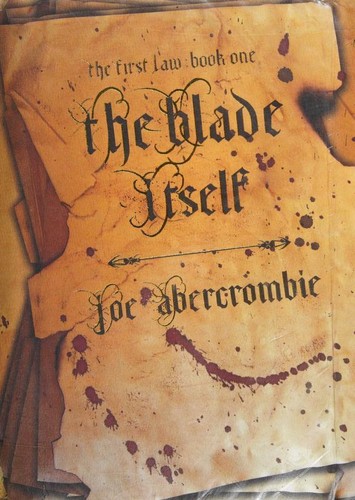
I went into this because a coworker kept saying “if you liked Game of Thrones you’ll like this,” which is the kind of recommendation that’s right about forty percent of the time, and this time it actually landed. What sold me wasn’t the political intrigue, which is fine but not the point, it was Glokta, the crippled torturer whose internal monologue is basically wall-to-wall self-loathing sarcasm, and who somehow ends up reading as one of the more decent people in the whole cast despite, you know, being a professional torturer. That’s a weird sentence to type but it’s true.
The barbarian, Logen, has this habit that a bunch of readers clocked independently, whispering “still alive” to himself after every fight he survives, and it does more character work in three words than most fantasy protagonists get in three hundred pages of internal monologue. I found myself saying it under my breath doing unrelated stressful things around the house, which either means the book got under my skin or I need a hobby, possibly both.
Here’s my actual gripe, the same one a lot of other readers land on: the ending doesn’t resolve so much as stop, deliberately, on purpose, “you are doomed to be the man you are” as the closest thing to a thesis statement the whole trilogy offers. I appreciate the refusal to hand out a tidy bow. I also spent the last fifty pages of book three bracing for a twist that never quite arrives, and closed it feeling more unsettled than satisfied, which I think is exactly what Abercrombie wanted and I still resent a little.
Four stars across the trilogy, not five, because the back third of book two sags under its own political maneuvering before book three picks the pace back up. But Glokta alone is worth the read, and “never trust a wizard” turned out to be better advice than I expected going in.